 OneSchool Global New Zealand Regional Head of School Matt Morrison has featured in the leading education trade press publication School News NZ, sharing his thoughts on how schools can bring New Zealand’s refreshed National Curriculum to life. It’s the country’s first full curriculum update in almost 20 years.
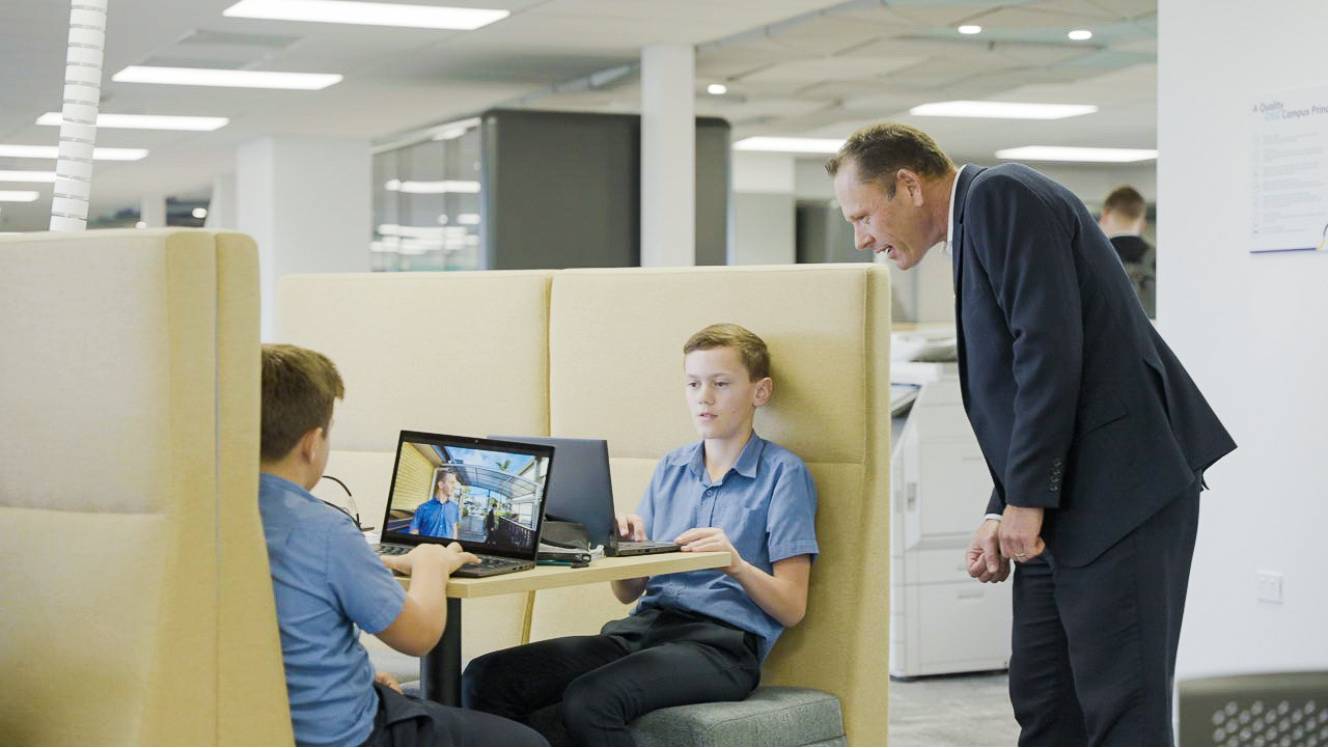
Matt argues that one of the best ways to meet the curriculum’s goals is to build student agency, meaning students learn to set goals, track their own progress and take ownership of their learning. He uses our recently refurbished Auckland campus as a practical example of how learning spaces, teaching and technology can work together to support this.
Read the full article below, or see the original on School News NZ: https://www.schoolnews.co.nz/2026/10/bringing-the-refreshed-curriculum-to-life-the-importance-of-student-agency/
Following the release of the refreshed New Zealand National Curriculum, schools across the country are now turning their attention to implementation.
It is an exciting moment for New Zealand education as the first full curriculum update in almost 20 years.
As part of this work, educators nationwide are considering how best to engage students with new content, from online safety to a strengthened focus on the arts, health and physical education.
At OneSchool Global New Zealand, we are undertaking the same work across our 18 campuses as we look to bring the new curriculum to life for students, including at our recently refurbished Auckland campus.
Why student agency matters
The refreshed curriculum provides a pathway for learning, with a year-by-year structure guiding the knowledge and practices students should acquire as they progress through school.
Yet it is now the role of teachers to deliver the new curriculum and ensure the objectives of the refresh are realised.
One of the most effective ways to meet this ambition is by cultivating student agency.
As educators know, this is the capacity for students to understand themselves as learners, set meaningful goals, monitor their own progress and take increasing responsibility for their educational journey.
When students take ownership in this way, learning the new national curriculum can become a genuinely engaging experience that translates into academic success.
This also matters for setting students up to succeed in life after school.
The capacity to direct, manage and take ownership of one’s own learning will allow students to keep adapting long after they leave the classroom. In a time of rapid technological and economic change, that skill has never been more important.
An integrated approach to learning
At OneSchool Global, our Learning to Learn Framework offers a proven approach to this challenge. This framework starts with the learner, and then considers how to align space, pedagogy and technology in support of student agency.
The principle underpinning the framework is that environments should be designed to help students take increasing ownership of their learning, developing competencies such as organisation, goal-setting and reflection.
The framework has been implemented across our 123 campuses in 20 countries, including all 18 of our campuses here in New Zealand. As a marker for its impact, it was recently awarded a Silver A’ Design Award, recognised by an international jury of academics and design professionals as external validation that intentional, learner-centred design delivers results.
The recent refurbishment of our Auckland campus demonstrates what this looks like in practice and offers useful insights for schools approaching the refreshed curriculum.
Developing life-ready students
Through this refurbishment, learning spaces were intentionally designed to support the Learning to Learn Framework, creating flexible, student-centred environments that encourage independence, responsibility and self-management.
The campus offers collaborative, semi-collaborative and focused zones, giving students genuine choice and autonomy over where and how they learn. It also encourages them to make purposeful decisions in support of their own progress.
For example, students might choose a quiet, individual space for focused study, then move to a collaborative area to work with fellow students when the task calls for it. Equally, students also have the flexibility to manage their time and prioritise specific tasks. The result is learners who are actively engaged in shaping their own educational experience.
This approach translates directly to the refreshed curriculum.
When students engage with new content, such as on online safety, they will be learning to identify misinformation and privacy risks through active inquiry, collaborative discussion and independent research.
A flexible learning environment supports this by enabling students to move fluidly between focused individual work and peer collaboration as the learning requires.
Improved visibility and accessibility within the learning environment have also strengthened how teachers and students interact, allowing teachers to guide, question and support students as they take ownership of their learning journeys.
This is particularly valuable as teachers navigate the year-on-year progressions set out in the refreshed curriculum, enabling them to provide targeted support while still encouraging student independence.
Technology plays an important role too.
Modern, technology-rich spaces help students access resources independently, track their own progress, and engage more actively in their learning pathways.
As the Ministry of Education rolls out updated teaching resources, schools with strong technological infrastructure will be well placed to integrate these tools in ways that further support student agency.
Overall, the refurbishment has helped to build a learning environment in which students can take increasing responsibility for their own progress, developing the confidence, resilience and skills required to become life-ready.
Bringing the curriculum to life
Schools are required to implement the new curriculum in stages, from 2027 until 2030.
This gives teachers time to prepare for the new content while considering how they can empower students to take ownership of their learning journeys.
For those educators, our Auckland campus offers a practical example of how intentional alignment between space, pedagogy and curriculum can foster student agency and bring the new curriculum to life.